Originally posted on February 12, 2014 @ 3:35 PM
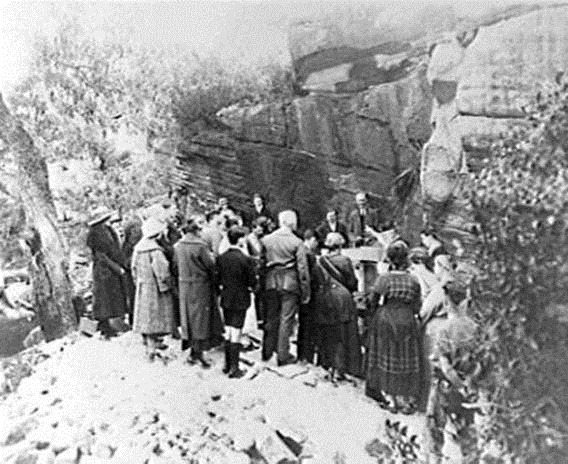 Dr Long’s New book “REAL RISK – Human Discerning and Risk” is packed with interesting little stories and anecdotes, we published one the other day The South Korean Fan Death Mystery and it was a big hit. Another I enjoyed was this one about the Star Amphitheatre in Balmoral Sydney. It was built, at great cost, by an organisation wanting to view the 2nd coming of Christ. Unfortunately for this group, the Christ failed to arrive on May 21 1924, this however did not end the activities of the cult but rather strengthened it. The group then developed a whole array of explanations as to why Christ did return but they didn’t see it. This story is from Chapter 1 of the book (download a free copy here)
More Bricks and Mortar for the Amphitheatre of Denial
Sigmund Freud may have been wrong about a few things but his discovery and naming of ‘defense mechanisms’ was ground breaking. However, we practically don’t need Freud to help us, we all know that admitting being wrong is a profoundly difficult activity for most humans. Children seem to learn how to deny wrongness automatically by two years of age.
Admitting wrongness is an extremely demanding emotional activity and humans have a range of strategies at their disposal to ensure that mistakes are explained away. Understanding wrongology and the psychology of defence is the foundation of all under-reporting and creation of ‘spin’.
One of the case studies in my book concerns religious cults. We can learn so much about risk from the way groups deny wrongness particularly in the face of uncertainty and addictions.
The Star Amphitheatre in Balmoral Sydney was built in 1923-24 for the express purpose of viewing the second coming of Christ who was going to walk on water through Sydney Heads. In 1923 a woman named Mary Eleanor Rocke began to buy land at the northern end of Edwards Bay in Balmoral, Sydney. She wanted to build an amphitheatre on behalf of an organization called the Order of the Star of the East.
The amphitheatre was designed to face North Head and Middle Head, so it was ideally located to view the entrance to Sydney Harbour.
The Star Amphitheatre was finished in 1924, costing 20,000 pounds; it towered 20 metres above the beach, and it could hold 3000 people. Unfortunately for this group, the Christ failed to arrive on May 21 1924, this however did not end the activities of the cult but rather strengthened it. The group then developed a whole array of explanations as to why Christ did return but they didn’t see it. You can read about how cognitive dissonance, sunk cost effect and other denial mechanisms work in my book, Risk Makes Sense.
The Star Amphitheatre was demolished in the 1950’s and a block of flats built on the site.
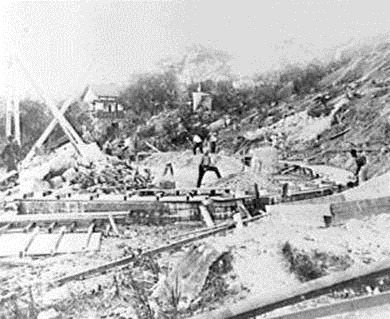
Figure 2. Construction of the Star Amphitheatre
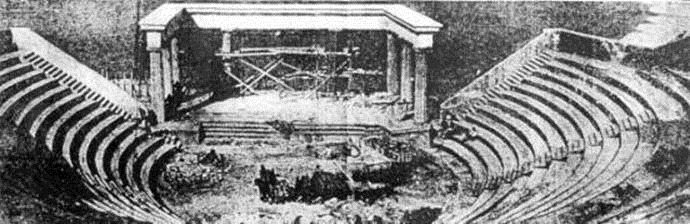
Figure 3. Completed Star Amphitheatre
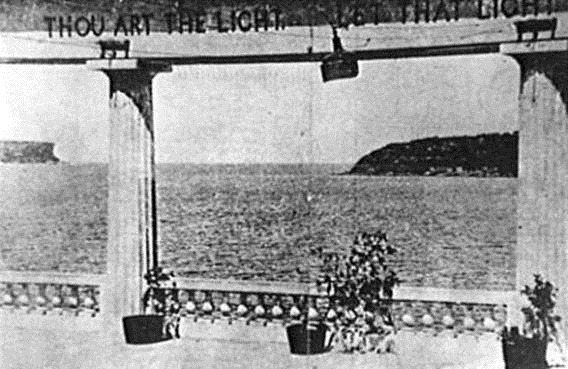
Figure 4. View from the Star Amphitheatre
What has all this got to do with safety and risk?
The denial of humanness is the foundation of the zero cult, the idea that all accidents and incidents are preventable is the cult’s logic. Zero harm is premised on a fundamentalist logic which projects attainable perfection onto human risk taking. The language of perfection, ‘primes’ humans for failure and denial. The language of ‘zero’ is a language that ‘primes’ non-learning. Rather than understanding that learning is essential to humanness and that risk is essential to learning, the zero harm cult proposes that risk is wrong.
Whilst ‘zero’ language may be attractive to CEOs it makes as much sense of risk as the Order of the Star of the East and the Star Amphitheatre. The logic and language of ‘zero’ is a language that is founded on proof of truth by opposites. In this binary way of thinking the language of ‘zero’ makes sense because a denial of zero somehow sets a goal of harm. Similar logic proposed that a rejection of the Afghanistan War was an expression of sympathy for terrorism.
The rejection of the language of ‘zero’ does not propose that injuries are acceptable. A rejection of the language of ‘zero’ is a rejection of language which primes humans in organisations for non-learning, cynicism and scepticism. Organisational culture characterized by non-learning, cynicism and scepticism is destructive to safety and the management of risk. All goals have an embedded psychology which the cult of zero denies.
What is most peculiar about CEO proponents of ‘zero’ is that this goal is always proposed as something good for other people. CEO performance is not judged by ‘zero mistakes’, I wonder why not? Is this not more bricks and mortar for the Star Amphitheatre?
Author’s Resource Box
Dr Robert Long
PhD., (UWS) BEd., (USA) BTh., (SCD) MEd., (Syd) MOH (La Trobe), Dip T., Dip Min., MACE, CFSIA.
Executive Director – Human Dymensions Pty Ltd
Rob has a creative career in teaching, education, community services, government and management.
Rob is engaged by organisations because of his expertise in culture, learning, risk and social psychology. He is a skilled presenter and designer of learning events, training and curriculum.
Web Link: www.humandymensions.com

Dr Rob Long
Latest posts by Dr Rob Long (see all)
- Causal Patterning and Affirming False Belief in Safety - July 26, 2024
- Safety=Zero Culture - July 25, 2024
- Embracing Imperfection - July 25, 2024
- The Joy of Imperfection in Safety - July 25, 2024
- Gold Medal Safety and The Nonsense of Perfectionism - July 25, 2024

Do you have any thoughts? Please share them below