Originally posted on June 4, 2021 @ 8:41 AM
Investigations and Learning
You’ve got to hand it to Safety, if it can turn something into a simplistic delusion, it will. We see this with the recent attention to learning in regard to investigations. Good olde Safety now expert in learning theory.
If one signs up for a degree in Education one is blasted with years of study into learning theory, not so Safety. For Safety, learning is about in and out, simplistic behaviourist shlock, with about as much value as the AIHS BoK Chapter on Ethics.
Educators know there are at least 9 approaches to learning that match different learning intelligences. Each intelligence uses a different worldview in the way it learns.
Currently, all the models of investigations on the market only address one of those nine learning intelligences.
When it comes to investigations Safety is great at getting out exactly what it expects according to its mechanistic worldview. The Dreamworld investigation is a classic example (https://safetyrisk.net/an-engineering-dreamworld/ ). This makes for investigation outcomes beautifully tailored to the mono-disciplinary assumptions of the Safety worldview. Send in the engineers, we need an investigation.
I’ve mapped the learning intelligences semiotically here:
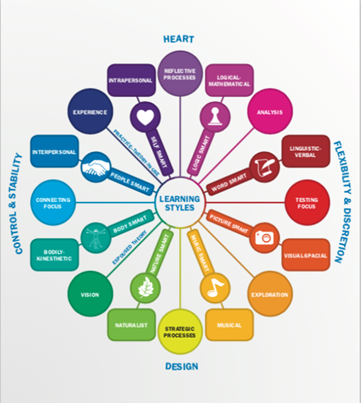
So, with only one of these learning intelligences addressed in the safety worldview in investigation, how good is your investigation methodology? Unless one embraces a transdisciplinary worldview (https://safetyrisk.net/the-value-of-transdisciplinary-inquiry-in-a-crisis/ ), there is little likelihood that much learning is going on in an investigation by Safety yes, but plenty of safety indoctrination. Indoctrination is the opposite of Education and Learning.
If you want to learn about learning in risk perhaps start here: https://www.humandymensions.com/product/tackling-risk/
The SEEK methodology addresses all learning intelligences and approaches investigation from a transdisciplinary worldview (https://cllr.com.au/product/seek-the-social-psyvhology-of-event-investigations-unit-2/ ).

Dr Rob Long
Latest posts by Dr Rob Long (see all)
- Causal Patterning and Affirming False Belief in Safety - July 26, 2024
- Safety=Zero Culture - July 25, 2024
- Embracing Imperfection - July 25, 2024
- The Joy of Imperfection in Safety - July 25, 2024
- Gold Medal Safety and The Nonsense of Perfectionism - July 25, 2024

Wynand says
Not only is the learning aspect questionable, but the investigations in which I have been involved applied extensive methodology to the most trivial of incidents. A full investigation of two to three meetings of one to three hours each to find the “root cause” of why someone forgot to open a (non-critical) valve in the correct sequence, or why someone managed to break a glass flask. After the (often fictitious) “root cause” was found, a mountain of paperwork followed, usually culminating in expanding a procedure to cover the eventuality. Human fallibility was never considered to be an acceptable explanation, and recurrence of even the most trivial “accident” was to be prevented by the change in procedure. (I have never seen someone doing anything differently after the fact. How do you “train” someone not to forget something, misjudge a step or distance to a corner, focus on everything at the same time?
Rob Long says
Wynand, its funny isn’t it how a safety qualification makes one an expert in everything from learning theory to epidemiology. Then when an incident happens they call in the lawyers and the safety advisor gets relegated to toilet room, to wipe up the crap. As for fallibility, when all is zero such linguistics never make the discourse.
Didn’t you know? Safety is objective, infallible, all knowing and investigates with immutability.
Meanwhile back in the real world, everything is readied for the delivery of the proverbial causality sausage.