Triarchic Thinking and Risk
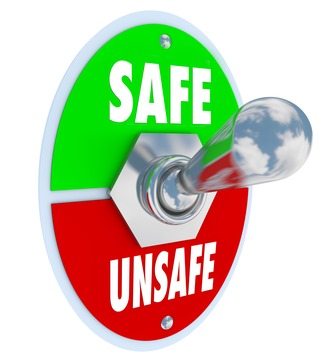 The language and symbols of the risk and safety industry are plagued with everything binary. The imagined certainty of black and white thinking in a random and fallible world affords the idea that human behavior is predictable and mechanical. Nothing is more delusional than the notion that anything human is both fully knowable and predictable. I heard recently of a tier one construction company that is increasing the number of cameras it has focused on it construction sites so it can observe the behaviour of workers and from such observation ‘predict’ a possible accident. Despite the fact that this idea smacks of eugenics and hyper-surveillance, it is fundamentally flawed by its own assumptions about humans, behaviourism and the randomness of life. You can see the kind of thinking (masked behind the spin of security) here:
https://www.videosurveillance.com/building-construction-site-security.asp
https://pro-vigil.com/2015/06/12/why-construction-surveillance-is-so-important/
http://elinetechnology.com/wireless-security-cameras-for-construction-sites/
When one espouses the mythology and ideology of zero this kind of trajectory that must follow. When one is under control of the archetype of Safety, this is where one must go to seek a ‘guarantee’ of zero. The by-products and trade-offs in this kind of activity are a disaster for culture fostering:
· the demise of trust
· increased cynicism and skepticism
· the breakdown of authority
· the deception that behavior can be observed objectively
· behaviourism as ‘scientific’
· the delusion that un-safety has common indicators
· a binary worldview to justify eugenics
· a denial of human freedom
· the use of safety for unethical practice and,
· the merging of archetypes (Safety, Security and Productivity) into the normalization of the myth of ‘surveillance for good’
The ideology of zero and binary thinking ends up justifying a range of unethical strategies in the name of good, with no thought of the by-products and trade-offs that ooze with long lasting cultural toxicity. (https://www.technologyreview.com/s/540836/new-boss-on-construction-sites-is-a-drone/
https://www.senserasystems.com/sites/default/files/Are-Construction-Cameras-Worth-It.pdf)
Of course, if one challenges the binary mindset that justifies all this stuff one gets the silly question: ‘why, do you want to see people harmed?’ Of ‘how many people would you like to be killed on site today?’ You can see plenty of examples of this discourse:
http://miningquiz.com/pdf/Accident_Prevention/ZIP_Solution_to_the_Safety_Challenge.pdf
http://www.gradcracker.com/hub/92/balfour-beatty/videos/802/balfour-beatty-zero-harm/.
It is these binary questions that have a trajectory that justifies all kinds of unethical and dehumanising practices, justified in the name of good. Similarly, there are companies advertising psychometrics to gullible CEOs and organisations offering diagnostics to measure risk and un-safety tendencies so that these ‘problems’ can be weeded out of the organization. Eugenics is simply immoral and unethical. (https://safetyrisk.net/safety-eugenics-and-the-engineering-of-risk-aversion/
https://safetyrisk.net/if-there-was-a-risk-gene-would-you-engineer-it-out/). The very nature of what it is to human is denied and despised by these organisations and this discourse.
What is missing in all this binary discourse in seeking certainty is the recognition that life is not binary but triarchic (https://safetyrisk.net/the-triarchic-mind-risk-and-safety/ ). There is no system 1 and 2, no fast and slow and many other binary metaphors that anchor people to the archetype of Safety. Neither is there any ‘Engineering’ Resilience indeed, such language further endorses the binary discourse of Safety. What is problematic with all this binary language is that it denies doubt and all the uncertainties between black and white. So lets have a look at triarchic thinking.
We know from Media (Brain Rules) that the brain is in 3.

The Buddhists think triarchically
http://www.universal-tao.com/article/three_minds.html
The Celts thought triarchically

The Vikings thought triarchically

The Druids thought triarchically

Christianity thinks triarchically

Educationalists think triarchically

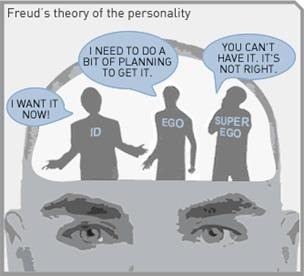
Freud thought triarchically
Jung thought triarchically
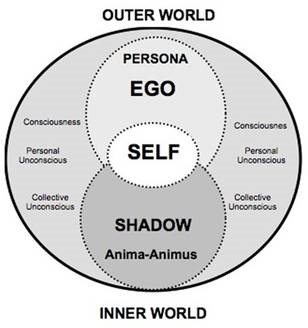
The list of civilizations and groups that thought and think triarchically is endless.
There is nothing to fear from triarchical thinking, you are in good company, every civilization or culture thinks triarchically. So why is this important? Because, triarchic thinking helps manage the many tensions of uncertainty and the many paradoxes and dialectics that exists in real living. It’s only Safety that wants to hold to the delusion that life is binary (https://safetyrisk.net/reality-vs-theory-the-binary-divide/ ). It’s only Safety that jams its head in the sand and denies uncertainty, that loves the discourse of zero and infinity (zero and infinity are the same concept) and is blind to all that is in-between. (https://safetyrisk.net/incrementalism-catastrophism-and-all-thats-in-between/
https://safetyrisk.net/in-praise-of-in-between-thinking-in-risk-and-safety/
When one adopts a triarchic mindset, one acknowledged that risk is not certain and that Risk Makes Sense (http://cart.humandymensions.com/product/risk-makes-sense/ ). This does not mean one wants people harmed but holds in tension the paradox that the elimination of risk is the elimination of all learning, creativity and innovation. These critical human activities are discovered in the in-between and are lost at either polarity. This is why all Human Dymensions programs start with the module One Brain Three Minds (https://vimeo.com/106770292, https://vimeo.com/156926212). It is only from an honest acknowledgement of what risk is – ‘The uncertainty associated with human action and the trust and faith required to suspend uncertainty, to take that action’, that we can be honest with how we tackle risk.
So, when the surveillance cameras don’t work, when the behaviourist extremes lead to a negative police state, when harm doesn’t go away, what is next? More cameras, more policing, more eugenics???

Dr Rob Long
Latest posts by Dr Rob Long (see all)
- Causal Patterning and Affirming False Belief in Safety - July 26, 2024
- Safety=Zero Culture - July 25, 2024
- Embracing Imperfection - July 25, 2024
- The Joy of Imperfection in Safety - July 25, 2024
- Gold Medal Safety and The Nonsense of Perfectionism - July 25, 2024

Do you have any thoughts? Please share them below