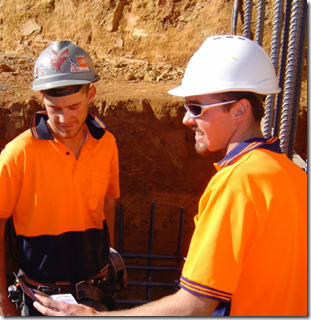
 It is a strange that people who rise to levels of supervisor receive little or no education in supervision. I find all the time that whilst executives receive significant investment in professional development that we often expect people who supervise to ‘learn on the job’.
Whenever we run our Superviz workshops we find that 80% or more have received no help in the fundamentals of: people skills, communications skills, time management, tackling conflict, listening skills, personality skills, performance management, managing the middle (up and down), generational management, team dynamics, self management, goal setting, managing politics, recording, writing and reporting skills. We cover many of these skills in the two day Superviz program (Details HERE).
This is why we developed the supervisor checklist that is available for a free download here: [download id=”99032″]
It’s strange that we expect people to ‘learn things on the job’ when many of these skills require training, education and coaching practice. It’s like people can become good leaders in people skills by magic???
Over the past 40 years I have worked under numerous bosses in 7 industries and it doesn’t matter whether its public service, mining, manufacturing, education and training, building and construction or the corrections industry, supervision seems to be the most critical skill that is lacking when tackling risk. One thing is for sure, paperwork doesn’t replace the need for skilled observations, perceptions and conversations on site. No iphone app, algorithm or checklist or computer program can replace the need to observe, engage, build relationships, hold effective conversations and manage presenting issues.
Recently a young friend Stan, accepted a supervision position and became answerable to the Executive Director. All seemed to be going well until his wife and he had some personal health issues. The Executive Director was a pretty ‘hard’ person and so Stan felt he couldn’t trust the ED with his information and so told a lie or two so he could get some leave. Unbeknownst to Stan his boss too had similar issues but neither spoke to each other, how strange when they both showed up to the same specialist clinic with their partners and their lack of trust between each other was exposed. The outcome was a good one but could have backfired, Stan and his boss were quite empathetic to each other because of this shared situation. But what if this was not the case? What if a lack of trust encourages lying and underreporting? What if this even applies to reporting a near miss or a concern about safety? You can join the dots.
In the Superviz workshops we teach supervisors some very practical and easy skills for recognizing temperament types and what strategies are best to engender trust, belonging, openness and engagement. It’s amazing how some small gestures, symbols of understanding and open conversations can have a huge effect and some of these skills don’t come naturally. So, download the checklist and see how you go, have you been given the skills required to be an effective supervisor? If you are a Manager, have you helped your supervisors to upskill in: people, communication, time, team and conflict skills?

Dr Rob Long
Latest posts by Dr Rob Long (see all)
- Causal Patterning and Affirming False Belief in Safety - July 26, 2024
- Safety=Zero Culture - July 25, 2024
- Embracing Imperfection - July 25, 2024
- The Joy of Imperfection in Safety - July 25, 2024
- Gold Medal Safety and The Nonsense of Perfectionism - July 25, 2024

Do you have any thoughts? Please share them below