
Predictive Safety: Tomorrow’s Accident, Today’s Invoice

By Barry Spud, Chief Artificial Intelligence Officer, Naturally
After twenty years of failing to predict accidents, I have purchased software that can fail considerably faster.
Welcome to SPUD AI™: Safety Prediction Using Dodgy Assumptions.
Sadie questioned the name.
“That’s the internal version,” I explained. “The brochure says Strategic Prediction Using Data.”
“What data?”
“Whatever we’ve got.”
We uploaded twenty years of incident reports, behavioural observations and board presentations.
Every investigation recommended greater care. Every corrective action involved training. Every annual report demonstrated improvement.
Kevin called it a selective history.
The software called it training data.
Within minutes, SPUD AI delivered its assessment:
“This workplace is exceptionally safe.”
“Finally,” I announced, “independent confirmation.”
“You gave it your own reports,” Kevin said.
“Yes, but now a computer agrees.”
The system predicted zero injuries next month. Sadie ordered a cake.
Kevin asked whether it knew about the forklifts nearly hitting pedestrians.
“Only if somebody reported it.”
“I’ve reported it six times.”
“Then it certainly knows about you.”
Indeed, Kevin received the highest risk score in the organisation. His name appeared in numerous hazard reports and complaints about equipment.
The manager who reported nothing received a perfect score.
“It’s identified our problem people,” Sadie announced.
“It’s identified the people who tell you about problems.”
We recorded his resistance to data-driven decision-making.
Sadie particularly appreciated being able to intervene before anything happened.
“The system predicts you may demonstrate noncompliance on Thursday,” she told Kevin.
“With what?”
“We’ll know on Thursday. Complete this refresher.”
She called it a Pre-Emptive Learning Opportunity.
His objections increased his risk score.
Leadership insisted on human oversight, so every recommendation required a manager to click APPROVE.
The alternative button read:
REJECT AND ACCEPT RESPONSIBILITY.
We achieved unanimous agreement.
Unfortunately, SPUD AI then identified understaffing, overdue maintenance and production pressure as problems.
I contacted technical support.
“We purchased a safety solution, not a management problem.”
Eventually, I changed the prompt:
“Recommend improvements requiring no additional staff, equipment expenditure or changes to production.”
The answer appeared immediately:
“Provide awareness training.”
The system was working again.
We also created a digital twin of the workplace. Every machine was maintained, every walkway clear and every worker compliant.
“Where did you find this place?” Kevin asked.
“In our procedures.”
“So it’s the workplace we say we have?”
“Exactly. Now we have pictures.”
Sadie included them in our next tender.
At month’s end, we announced Forty-Seven Potential Incidents Prevented.
“How do you know they would have happened?” Kevin asked.
“They didn’t. Our intervention clearly worked.”
“What intervention?”
“We sent an email.”
The directors applauded. Nobody asked about the loading area.
Then SPUD AI produced a troubling prediction:
“Barry’s next initiative is likely to increase paperwork without resolving operational problems.”
Sadie checked the evidence: twenty years of initiatives, thousands of forms and repeated reports about the same conditions.
“It seems quite confident.”
“This,” I explained, “is why AI requires human judgement.”
I deleted the prediction, disabled Kevin’s access and commissioned a review of algorithmic bias.
Then I asked SPUD AI to justify our decision.
It produced a magnificent paragraph about responsible governance, ethical innovation and putting people first.
I approved it immediately.
At last, an AI output I could trust.
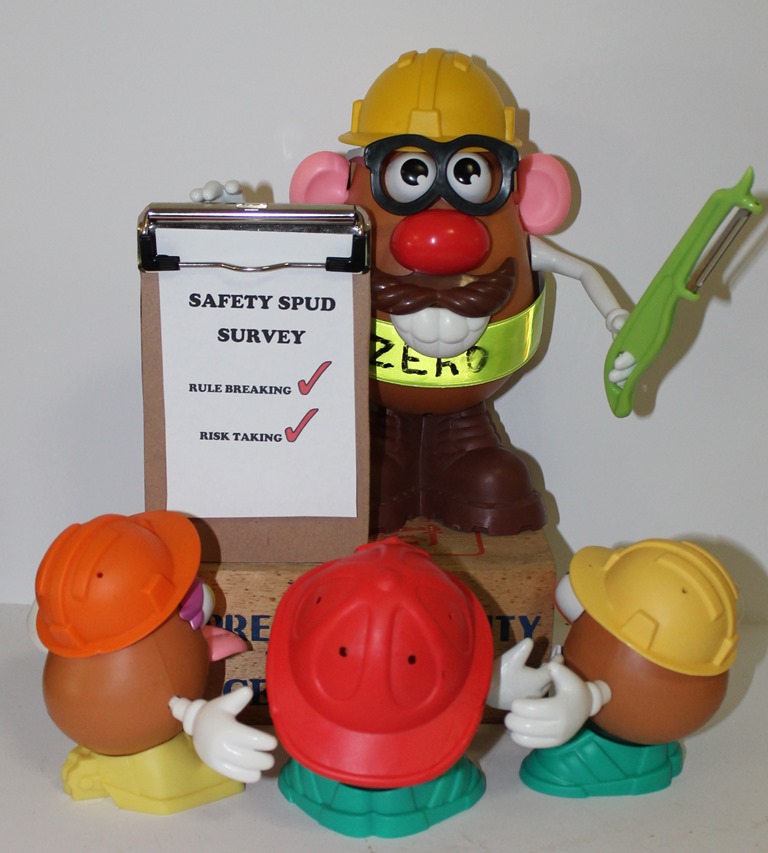
Barry Spud
Latest posts by Barry Spud (see all)
- Barry Spud Discovers Ethics: Unfortunately, It Applies to Him - November 7, 2026
- Kevin Returns from SPoR: Emergency Reinduction Required - November 7, 2026
- Safety Santa Is Coming to Audit - November 7, 2026
- Barry Spud Discovers the Value of Safety - November 7, 2026
- Sadie Tater Sees Red Over Pink - November 4, 2026